Do Visual Designers Generate Better AI Images?

Do Visual Designers Generate Better AI Images?

Yes, in a way, but what do we mean by “better”?

In The Unseen Hand: The Influence of Visual and AI Literacy on AI Text-to-Image Generation, and its partner article Algorithmic Creativity, we studied a question on everybody’s mind at the moment:

If an “AI” can create content, such as images, from a typed prompt, do design skills still matter? Or do technical skills matter even more?

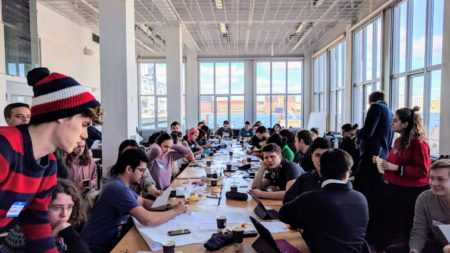
In collaboration with Mood Visuals, we asked students from a technical university and a design school to fulfill a brief of creating a “brutalist medieval castle.” We then tracked the prompts that students were using, and the experts from Mood Visuals rated the images on both aesthetic quality and on how well they fulfilled the brief.
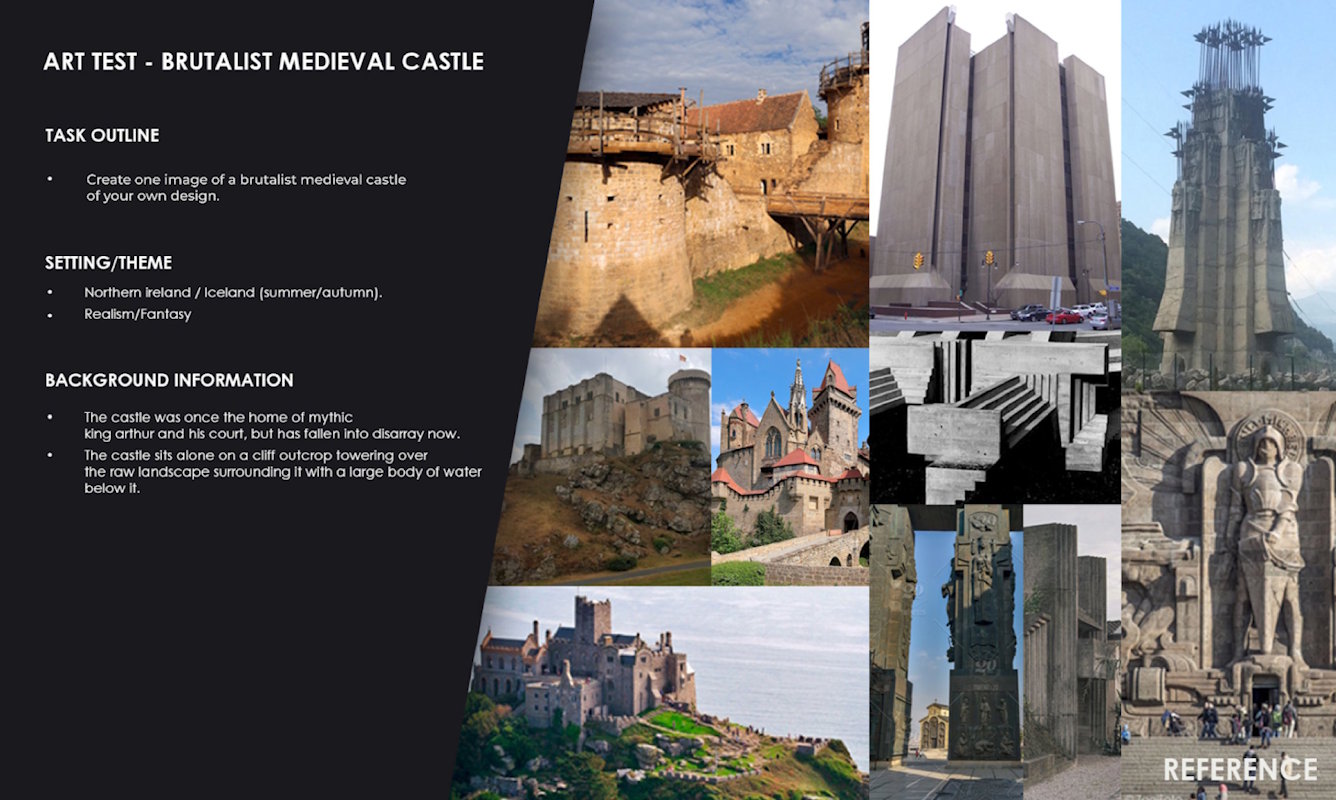
Mood Visual Brief

As you can see in the paper, we had some hypotheses, but the main takeaways were the following:

  1. The student groups created images that were rated as having equal visual appeal. Having visual skills (“visual literacy”) did not improve the aesthetic quality of the images.
  2. But: Students with visual skills (“visual literacy”) were much better at fulfilling the task.
  3. Visual design students also used a larger vocabulary, including more adjectives, and tried more varied prompts.

From this small study on the use of AI to generate concept art, we can see the outline of what AI image generation does (at least for the moment):
AI image generation has the democratizing effect of allowing everyone to create visually appealing images, but creating something that fulfills a task or is appropriate for a given situation continues to require expertise. 


Alessandro Canossa, Lisa Toender, Lucas Fellner, Jesper Juul, Willem Maden, and Jichen Zhu. 2025. “The Unseen Hand: The Influence of Visual and AI Literacy on AI Text-to-Image Generation.” IASDR Conference Series. https://dl.designresearchsociety.org/iasdr/iasdr2025/fullpapers/337.
https://jesperjuul.net/text/unseenhand/

Foundations of Digital Games’26

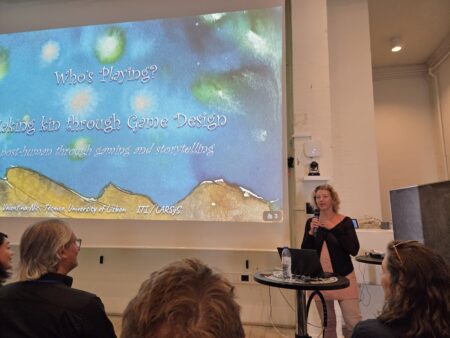
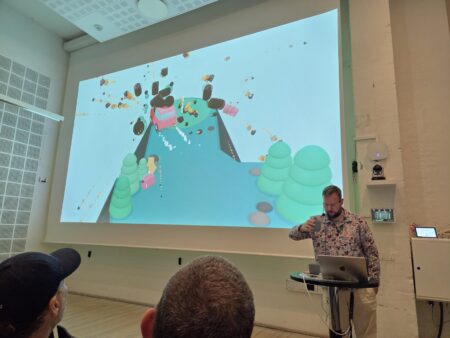
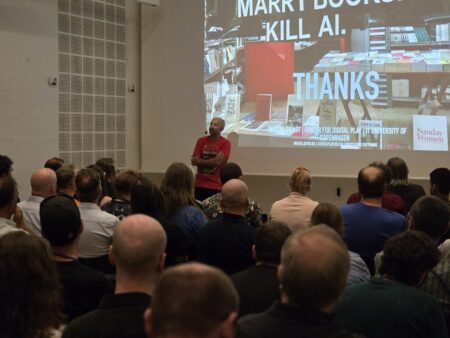
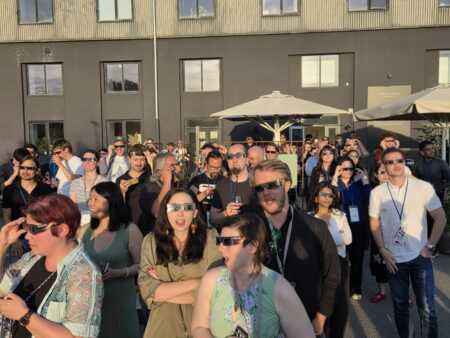
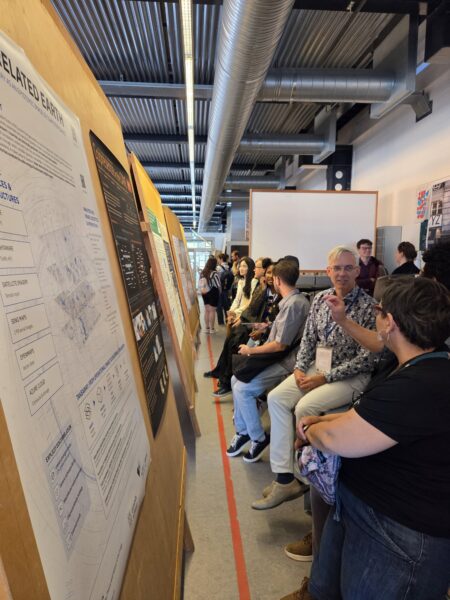
Final day of hosting the Foundations of Digital Games’26 conference at the Royal Danish Academy. Wonderful four days with lots of interesting workshops, talks, and demos.

Thanks especially to my co-organizer Alessandro Canossa, keynote speakers Valentina Nisi, Miguel Sicart, and Tim Garbos, program chairs Max Birk and Anastasia Salter, and to all helpful colleagues and volunteers at the academy. Thank you!

https://fdg2026.org


Apply for the Visual Game & Media Design program by March 1st!

The March 1st deadline is coming up for our Visual Game & Media Design two-year master’s program at the Royal Danish Academy in Copenhagen.
Visual Game & Media Design is a cross-disciplinary program open to all creative BA students.

Read more about the program here: https://royaldanishacademy.com/en/programme/visual-game-and-media-design


Víctor Navarro-Remesal’s new book “Zen and Slow Games”

Zen and Slow Games book coverWe are proud to welcome Víctor Navarro-Remesal’s  new book Zen and Slow Games in the Playful Thinking Series.
From the press:

A deep dive into the reflective modes of playfulness in video games.

Slowness and reflectiveness have always been part of the video game medium, though they have been used very differently throughout its history. In Zen and Slow Games, Víctor Navarro-Remesal challenges the dominant discourse of action and quick reflexes in video games to offer an analysis of reflectiveness as a style in games, tracing its evolution from its origins to the present time. Two labels are of particular importance: the Zen modes (and later, Zen games) of the 2000s, especially during the Casual Revolution, and the slow games or slow gaming movement, which started in the 2010s and is ongoing today. The term “reflective games” is offered as an umbrella to bring together these and other labels to raise awareness and discussion of slow gaming.

Praise:

This book brilliantly explores reflective games, a style that resists capitalism’s rush by creating spaces of peace, presence, and self-discovery. It weaves form, meaning, and everyday tactics into an inspiring vision of play.
Susana Tosca, author of Sameness and Repetition in Contemporary Media Culture and Understanding Videogames

A carefully crafted, profound critique of meditation and slowness in digital games, Zen and Slow Games takes us on a journey to the boundaries of the medium, detaching playfulness from the pressures of winning and performing otherwise dominant in games and contemporary societies.
Martin Roth, author of Unboxing Japanese Videogames and Thought-Provoking Play

In this age of neoliberal life coaching, time management, and endless self-optimization, many of us yearn for slower, more mindful lives. How these aspirations reflect in what and how we play is the focal theme of this timely, accessible, and nimble new book.
Stefano Gualeni, author of Fictional Games and Il Videogioco del Mondo

My 1989 Commodore 64 X-mas Demo; Too Much Fun is 1 year old

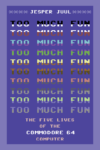
Too Much Fun book coverMy Commodore 64 book, Too Much Fun, is 1 year old this December. Since the holidays are approaching, I am existentially obliged to make you consider giving it as a gift.

You know what is even older? I wrote this Commodore 64 holiday demo, “The Ghost of X-mas” in (checks watch) 1989!

I was very proud of the way the snowflakes fall individually and accumulate, yet are also moved in unison by gusts of wind.

Happy holidays!